· by Rédaction
The Silence That Doesn't Kill: Taming the Pauses in a Video Chat Conversation
In random video chat, silence is seen as a failure — wrongly. Here's how to read, hold and use pauses to turn awkward emptiness into a moment of genuine connection.
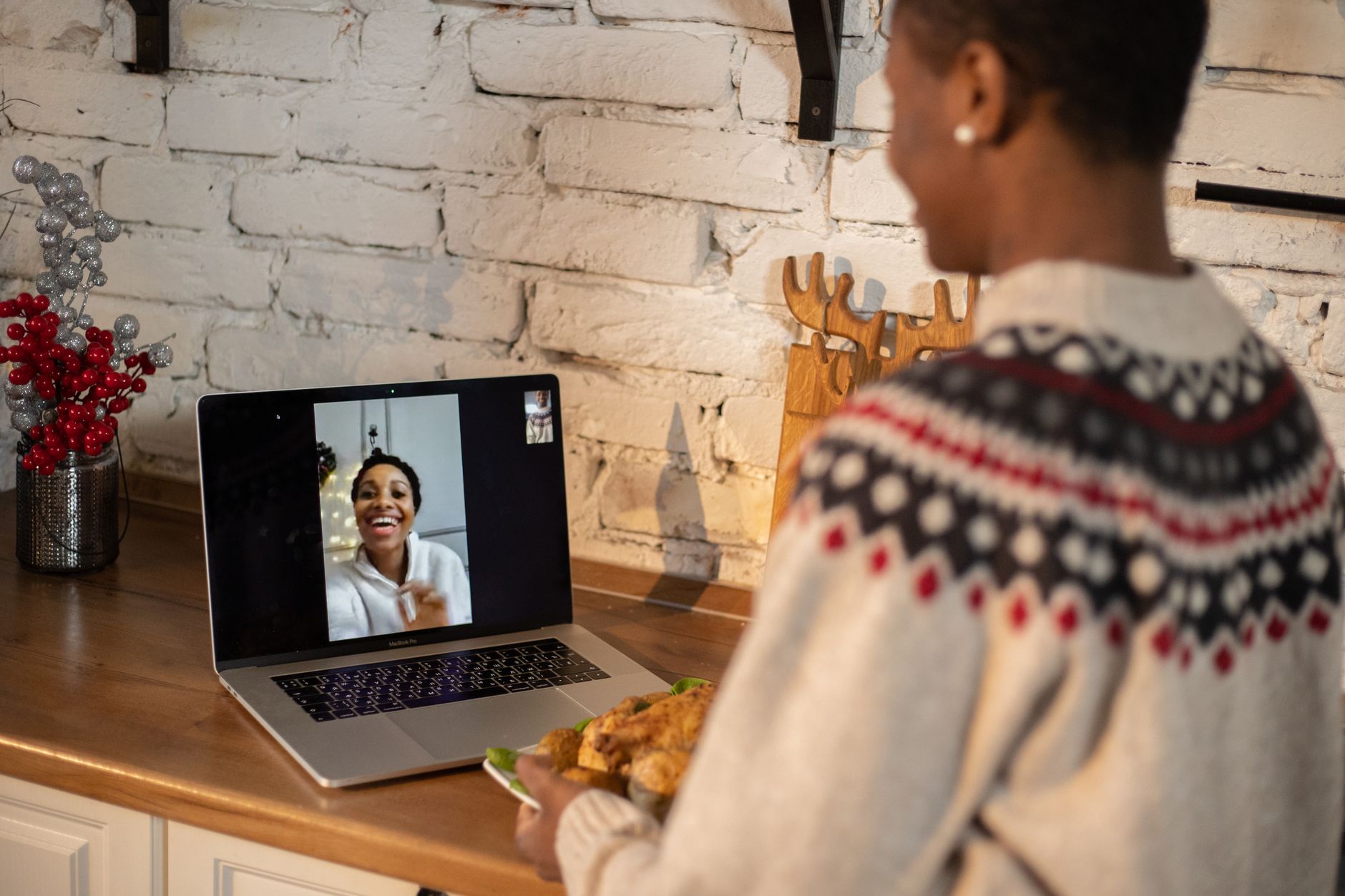
There's one very precise second, in a random video chat, when everything tips over. You've just traded three sentences with a stranger, the conversation was working, and then suddenly: nothing. Nobody speaks. The face across from you is waiting, you're waiting too, and the suspension drags on — what? two seconds? three? — before one of you cuts.
And yet it wasn't a failure. It was a silence. And on a video chat, silence is probably the most misunderstood and most badly handled phenomenon of the entire interaction.
Most video chat advice revolves around filling: what to say, how to open, which topics to bring up. Nobody addresses the reverse — what to do when there's nothing to say. That's a shame, because the ability to hold a pause without panicking is probably what separates the people you talk to for thirty minutes from the ones you skip after twenty seconds.
Why Three Seconds of Emptiness Hurt So Much
Our tolerance for silence is ridiculously low
Research in conversation analysis is fairly unanimous on this point: in an ordinary conversation between speakers of the same language, the average gap between two turns at talk hovers around 200 milliseconds. That's the most frequently cited finding from the work of linguist Stephen Levinson and his team at the Max Planck Institute for Psycholinguistics in Nijmegen, who compared around ten languages across the world: the mechanics of turn-taking are astonishingly universal and astonishingly fast.
The direct consequence: beyond roughly one second of silence, our brain reads the absence of a reply as a signal. And the default signal is never neutral. A pause that's too long before a "yes" is read as a polite "no." A pause before answering a question is read as embarrassment. Psychologist Namkje Koudenburg, at the University of Groningen, showed in a series of experiments that four seconds of silence within a group are enough to cause a drop in participants' sense of belonging and social validation. Four seconds.
On a random video chat, where you have no relational capital with the other person, that window shrinks even further. Silence isn't merely uncomfortable: it's interpreted as a verdict.
Chatroulette manufactures fake silences
Here's the problem almost nobody factors in. A substantial share of the pauses you experience in video chat don't really exist: they're produced by latency.
Between the moment your conversation partner finishes their sentence and the moment the sound reaches you, 150 to 400 milliseconds easily go by, depending on connection quality, the relay server and audio processing. Add the same delay in the other direction and you get a round trip that can approach a full second. In other words: you answer immediately, and the other person perceives a one-second hesitation. They conclude that you're searching for words, or worse, that you're not interested.
The International Telecommunication Union's recommendations on conversational speech quality (the well-known G.114 series) place the comfort threshold at around 150 ms one way; beyond 400 ms, the interaction becomes frankly painful. Plenty of consumer video chat sessions sit somewhere in between.
Hence a simple rule: before blaming the vibe, blame the network. Switching from Wi-Fi to a wired connection alone eliminates a good chunk of the jitter. A USB-C Ethernet adapter costs a handful of euros and removes pauses you were blaming on your own lack of conversational skill. Likewise, a headset with a directional microphone reduces echo-cancellation processing, which is one of the causes of those micro-cutouts at the start of a sentence.
The Five Silences (and They're Not Equal)
Not all pauses tell the same story. Knowing how to tell them apart is already knowing what to do with them.
| Type of silence | Visual signal | What it means | Response | |---|---|---|---| | Technical | Lips moving with no sound, frozen image | Nothing at all | Flag it, fix it | | Reflective | Gaze drifting upward or sideways | The other person is genuinely searching for an answer | Do nothing, wait | | Awkward | Tight smile, gaze downward, fidgeting hands | Topic too personal or too soon | Change register | | Disengagement | Fixed stare off-camera, body pulling back | The conversation is over | Close cleanly | | Complicity | Relaxed smile, calm breathing, steady gaze | It's working | Whatever you do, don't speak |
The last one is the rarest and the most precious. It's the one everyone kills by reflex, plugging it with a backup question.
Reflective silence: the worst possible moment to speak
When you ask a somewhat open question — "what would make you leave your city?" — and the other person looks up, they're building a real answer. That's exactly what you wanted. And it's precisely at that instant that 80% of people jump in: "well, I don't know, weird question, sorry." You've just cancelled the only interesting thing in your conversation.
A reliable cue: a gaze drifting away from the camera isn't disinterest, it's cognitive load. Research on eye movements during memory recall has documented this for a long time — we look away to free up attentional resources. Let it happen. Count three breaths. The answer that arrives will be worth ten platitudes.
Awkward silence: don't fill it with more words
The natural reflex in the face of embarrassment is to talk more. It's counterproductive: the person then feels doubly put on the spot. The right move is a change of register, not of topic.
Concretely: shift from the personal to the concrete, from feeling to object. "Okay, total change of subject — what's that thing behind you, on the shelf?" The background is an inexhaustible resource, immediately visible, and entirely non-threatening. It's actually one of the rare advantages of video chat over text chat.
Holding a Pause Without Panicking: the Technique
Occupy the silence with your body
Here's the central point of this article: a silence is only awkward if it's empty of signals. As long as you keep emitting — a nod, a smile, a slight shift in posture — the other person doesn't perceive a void, they perceive a pause.
This follows fairly logically from what Erving Goffman called "face-work": in any interaction, each party has to protect their own face and the other's. An inhabited silence says "I'm still here with you." A frozen silence says "I've checked out."
Three gestures that transform a pause:
- The slow nod (not the rapid nod, which means "hurry up"). It says: I'm digesting what you just said.
- The gaze held toward the camera with a light smile, for two to three seconds. Unbearable at first, formidably effective afterwards.
- The falling "mmh", that small sound of assent that doesn't take the floor but occupies the sonic space.
This third point assumes your microphone picks up those low-intensity sounds — many built-in laptop mics crush them with noise reduction. A cardioid USB microphone placed twenty centimetres away radically changes the texture of your sonic presence: breaths, short laughs and murmurs of agreement finally come through.
The deliberate three-second rule
Set yourself a personal threshold. Three seconds, timed. During those three seconds, you say nothing, you don't skip, you don't apologize. You look and you smile.
Statistically, on a random video chat, a large share of pauses resolve on their own: the other person picks the thread back up because the silence weighs on them as much as on you. By holding for three seconds, you let that follow-up arrive — and it is what will reveal the subject your conversation partner is genuinely interested in. You get the information you were after for free.
If nothing comes after three seconds, only then do you step in, and never with an apology. Don't say "sorry, awkward silence." Say something that acknowledges the silence without pathologizing it:
"I actually like silences. Makes a change from the usual noise around here."
That sentence is a test. The people who answer "me too" are exactly the ones the conversation will last with.
Avoiding the silences you create yourself
Some pauses come from our own badly calibrated questions. Closed questions produce a one-word answer, then a void. "Do you like music?" → "yeah" → nothing.
Questions that open nothing:
- The ones you answer with yes or no.
- The ones demanding a definitive choice ("your favourite film?") — too much pressure for a stranger.
- The ones requiring a number ("how old are you?"): they close instead of opening.
Questions that produce a story:
- "When was the last time you laughed like an idiot?"
- "What time is it where you are, and what are you supposed to be doing right now?"
- "What made you open this site tonight?"
That last one is the best of all: it's meta, it's honest, and it almost always produces an authentic answer because nobody has prepared for it.
Silence as a Skill, Not an Accident
What silence says about you
There's a cruel asymmetry in video chat: whoever tolerates silence best takes control of the rhythm. That's not manipulation, it's mechanics. When you don't fill, the other person fills — and in filling, they reveal themselves.
Salespeople have always known this, and so do negotiators; Chris Voss, a former FBI negotiator, made it one of the pillars of his book on negotiation, where the deliberate pause after a question is presented as the most underrated tool in the entire arsenal. The logic applies in exactly the same way when it's simply a matter of getting to know someone.
And on the introspective side, this discomfort with emptiness deserves to be worked on. Many shy people skip not because the conversation is bad, but because silence triggers an anxiety they've never learned to sit through. A book on shyness and social anxiety often does more for the quality of your conversations than ten lists of icebreakers.

A simple training programme, over ten sessions
If you want to work on this seriously, here's a manageable protocol:
- Sessions 1 to 3: you never skip during a silence. Never. You let the other person leave if they want to. Goal: break the reflex.
- Sessions 4 to 6: you mentally count to three before any follow-up. Observe who speaks up first.
- Sessions 7 to 10: you deliberately introduce a two-second pause after every answer the other person gives, before speaking. You'll see the average length of their replies increase.
Write down the results. A simple notebook next to the keyboard is enough, and it makes progress visible where subjective impressions always lie.
The limit: when silence is a genuine exit signal
Holding a pause isn't clinging on. If disengagement signals pile up — a gaze that never returns to the camera, monosyllabic answers, a body turned elsewhere — the silence is no longer a pause, it's a door. At that point you should exit cleanly rather than force things: a warm closing line is infinitely better than a desperate attempt to revive the conversation.
And on the safety front, let's state the obvious: a silence can also be a manoeuvre. Some people deliberately let the emptiness settle in to push you into talking, into saying too much, into filling the gap with personal details. The CNIL's recommendations on personal data online apply here as everywhere else: your exact city, your workplace, your full name are never filler material. If you feel the need to fill space, fill it with ideas, not with contact details. A webcam with a built-in physical cover also remains the simplest hygiene gesture between two sessions.
In Summary
Silence in video chat isn't the opposite of conversation. It's its breathing. What makes it unbearable isn't its length but its ambiguity: we don't know what it means, so we imagine the worst and cut.
Three things to remember:
- Check the technology first. A good share of your pauses are latency artefacts, not relational failures.
- Inhabit the silence rather than filling it. A nod, a smile, an "mmh" are enough to turn a void into a pause.
- Hold for three seconds. It's almost always the other person who picks the thread back up — and what they say tells you what really interests them.
The best conversations you'll have on a random video chat will contain silences. Not despite them: thanks to them. Because after a while, two strangers who can be quiet together without fleeing are no longer quite strangers.