· by Rédaction
Speaking Bad English and Still Connecting: Surviving the Language Barrier in Video Chat
Language is the first wall you hit in random video chat. Here's how to hold a real conversation with rough English, which tools actually help, and why an accent has never scared anyone away.
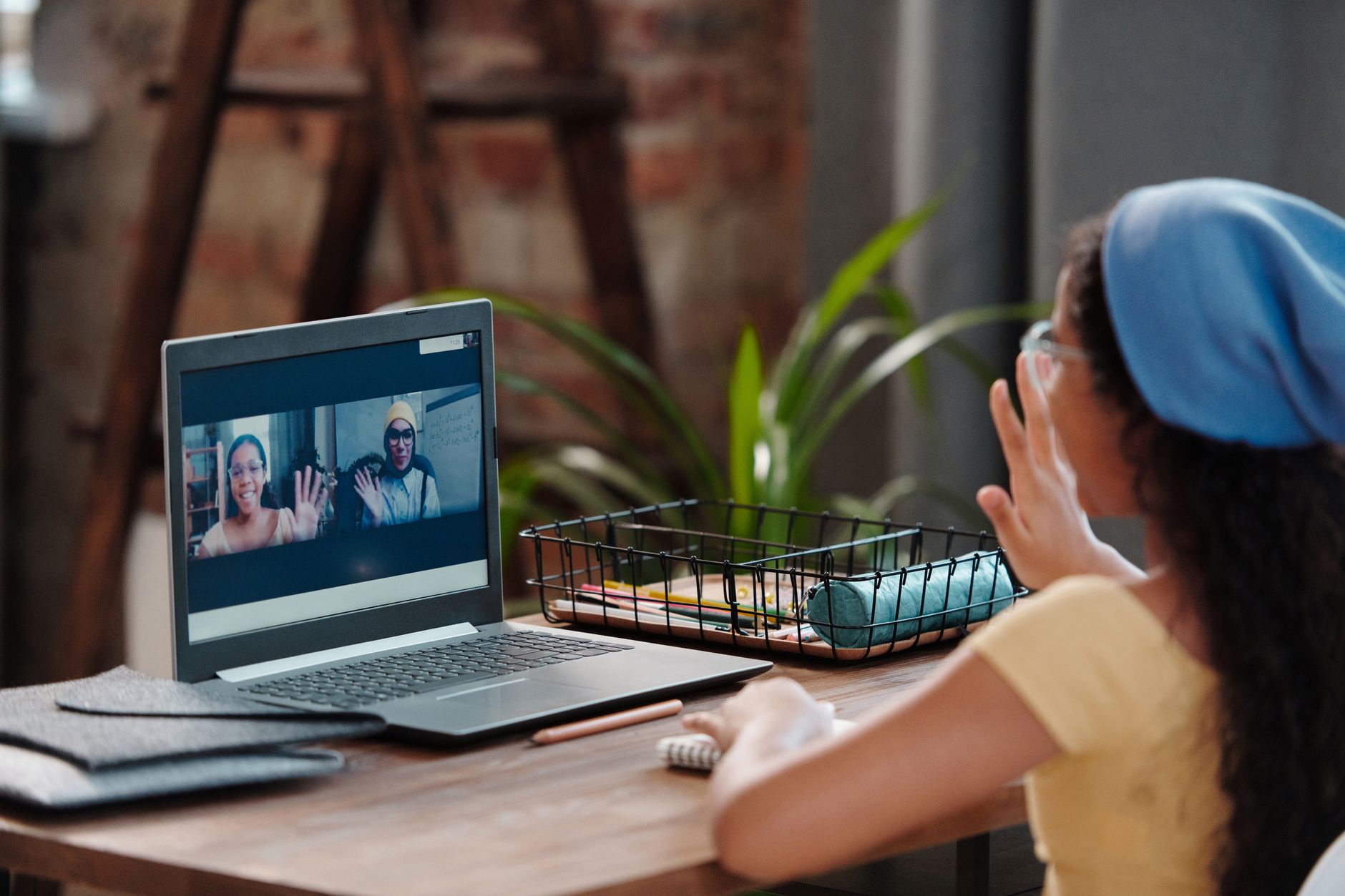
There's a very precise moment, on a chatroulette site, when a lot of people give up. It isn't when the face appears. It isn't when you have to say hello. It's two seconds later, when the other person answers in a language that isn't yours, at a speed that has nothing to do with your old school teacher's, and your brain produces a single sentence: I don't understand a thing.
So you skip. Politely, discreetly, with the quiet certainty of having dodged a humiliation. And you start again, hunting for someone who speaks your language — which is to say, hunting for a needle in a haystack.
The trouble is that this fear rests on a false assumption: that a conversation requires speaking well. This piece explains why a video chat conversation actually requires something else entirely, and how to hold ten fascinating minutes with a middle-schooler's vocabulary.
The Statistical Reality: You Are a Minority
French doesn't count for much in the random draw
According to the Observatoire de la langue française at the Organisation internationale de la Francophonie, there are roughly 320 million French speakers worldwide. That's substantial — and yet, set against the more than 5 billion internet users counted by the International Telecommunication Union (ITU), it remains a modest fraction.
The practical translation: on a random video chat platform with no geographic filter, the odds of landing on a French speaker are measured in single-digit percentages, not tens of percent. You'll meet Turks, Indians, Brazilians, Romanians, Filipinos, Germans, Moroccans, Americans.
Refusing to speak anything but French therefore means deliberately throwing away 90% of your encounters before they've even begun. It's a choice. But it's an expensive one, and it's rarely a conscious one.
Video chat English is not classroom English
Here's the piece of information that changes everything: the person across from you doesn't really speak English either, most of the time. Not really. They're using what linguists call English as a Lingua Franca (ELF), a phenomenon studied notably by researcher Barbara Seidlhofer (University of Vienna) and Jennifer Jenkins (University of Southampton).
Work on ELF reveals something counterintuitive: in exchanges between non-native speakers, grammatical errors — a forgotten third-person singular, missing articles, loose tenses — almost never get in the way of comprehension. What does block it are other factors: speed of delivery, the pronunciation of certain consonants, and above all the idiomatic expressions that native speakers adore.
In other words, two people who speak bad English often understand each other better than either would understand a Londoner. You are not sitting an exam. You are engaged in collective improvisation, and the other person is improvising just as much as you are.
What Actually Gets Through in a Video Conversation
The visual channel does half the work
This is video chat's enormous advantage over text chat, and beginners systematically fail to exploit it.
When you write "I go yesterday to my sister house," your reader gets a wobbly sentence. When you say it while holding up two fingers, pointing over your shoulder, miming a car and then smiling, your listener receives a redundant message: the gesture confirms the word, the tone confirms the intention, the expression confirms the emotion. Grammar becomes incidental.
Research by David McNeill (University of Chicago) on co-speech gesture has documented this well: gesture is not an ornament attached to language, it is an integral part of it and carries a share of the information that isn't in the words. When linguistic competence is low, that share mechanically increases.
In practical video chat terms:
- Show objects. Talking about your cat, your city, your guitar? Get up, go fetch it, hold it up to the camera. One object is worth thirty words you don't know.
- Write on paper. A simple spiral notepad beside the keyboard lets you display a word, a number, a city name when the pronunciation doesn't land. It's effective, it's fun, and it creates a moment of complicity.
- Slightly exaggerate your face. No grimacing, but raised eyebrows when you don't understand, a tilted head, a genuine smile. The other person then adjusts their pace without you having to ask.
Slowing down is more useful than expanding your vocabulary
If you remember only one technique, make it this one: articulate slowly.
The main difficulty for non-native speakers isn't a lack of words, it's processing speed. Someone speaking at 200 words a minute drowns you; at 110 words a minute, they become crystal clear. And the reverse holds too: your rough English delivered slowly, with pauses, comes across infinitely better than the same English fired off in a panic.
One magic sentence to keep handy, delivered with a smile in the very first seconds:
"Sorry, my English is not very good. Can you speak slowly?"
It works for three reasons. It warns (the other person adjusts their expectations), it defuses (you won't be judged, you've already excused yourself), and it often prompts a reply along the lines of "me too, don't worry" — which instantly establishes a fellow-sufferers' bond.
The Minimum Kit: 200 Words Is Enough
The list that covers 80% of exchanges
Lexical frequency studies, notably those built around Michael West's General Service List and later updated by researchers such as Paul Nation (Victoria University of Wellington), converge on a remarkable point: the 2,000 most frequent English words cover roughly 80% of everyday texts. And in informal spoken conversation, the proportion is even more favourable.
You don't need 2,000 words for a video chat. You need about 200, plus a handful of structures. Here's the useful core:
| Function | Phrases to know by heart | |---|---| | Opening | Hi, how are you? Where are you from? | | Keeping it going | Really? Why? Tell me more. And you? | | Buying time | Wait… how do you say… let me think | | Not understanding | Sorry? Again please? What does it mean? | | Agreeing | Yes! Exactly. Me too. That's cool. | | Qualifying | Maybe. I think so. Not really. | | Closing | It was nice talking to you. Take care. Bye! |
Seven lines. That's your complete toolkit. The rest — work vocabulary, country vocabulary, the name of a regional dish — you improvise with gestures and context.
The vocabulary of recurring topics
On an international chatroulette site, eighty percent of conversations revolve around five themes: country, weather, work or studies, music, food. These are deliberately neutral subjects that work everywhere and demand almost no abstract vocabulary.
It pays enormously to memorise three sentences on each of these five topics, phrased about you. "I live near Lyon, in the east of France." "I work in a bakery." "I love rock music, and old French songs." Nine seconds of ready-made speech that buy you precious time when panic starts creeping in.
To build that foundation without spending six months on it, a small conversational English handbook with short audio dialogues beats an ambitious grammar course abandoned at chapter three. The goal isn't mastery, it's minimum fluency.
Tools: What Helps, What Hurts
Machine translation, in small doses
The temptation is obvious: open a translator in a tab and push every sentence through it. It works — but badly, and for one precise reason: rhythm.
A video conversation lives on quick turn-taking. Each round trip to a translator adds five to fifteen seconds of silence during which your partner watches your eyes drop to the keyboard. After the third occurrence, they skip. Not out of impatience, but because the connection has broken.
Sensible use is occasional: one specific word that's blocking you, the name of a dish, a profession. You type three letters, hold the result up to the camera, laugh, carry on. Translation then becomes a shared game rather than a prosthesis.
What really matters: hearing each other
A frequent paradox, widely documented by speech therapists and acousticians alike: you understand a foreign language far less well when the sound is poor. Our brains compensate for acoustic flaws by leaning on linguistic knowledge; in a foreign language, that compensation barely functions.
The direct consequence: the best investment for speaking English in video chat isn't an app, it's audio. A decent USB headset, worn over the ears, removes room echo, isolates the other person's voice and eliminates feedback. The gain in comprehension is spectacular, often greater than six months of lessons.
Three settings round this out:
- Output volume, turned one notch above your usual level in your native language. You need more signal.
- Microphone position, two or three centimetres from the corner of your mouth, never straight in front — otherwise plosives (p, b, t) will clip.
- A quiet room. A washing machine in the background doesn't bother you in your own language; in English it makes you unintelligible.
Lighting is part of comprehension
This is a point few people connect to language, and yet. Lip-reading isn't reserved for the hard of hearing: everyone does it unconsciously, and the McGurk effect — described as early as 1976 by Harry McGurk and John MacDonald in Nature — showed that the image of lips literally alters the sound we think we hear.
If your face is backlit, your partner loses that crutch. A small LED ring light placed behind the screen, or simply a desk lamp aimed at you, measurably improves the intelligibility of your English. You aren't speaking any better: you're being understood better. The result is identical.

The Real Barrier Isn't Linguistic
The affective filter, or why we freeze
Linguist Stephen Krashen, in his 1980s work on language acquisition, proposed the notion of the affective filter: anxiety, lack of confidence and fear of judgement form a mental barrier that prevents linguistic input from being processed, regardless of actual level.
That is exactly what plays out in front of a webcam. Your 200 words are there, available. But stress makes them unreachable. You aren't searching for a word you don't know, you're searching for a word you do know that fear has filed away out of reach.
What lowers that filter isn't revision, it's low-stakes repetition. Hence a simple method: decide that the first twenty conversations of an evening don't count. They're rough drafts. You botch them, you don't care, you start again. Around the fifteenth, something loosens — and the English comes back on its own.
A French accent is not a handicap
This needs saying plainly, because so many people suffer over it needlessly: a French accent is, in the vast majority of cases, perceived positively abroad. It's recognisable, it carries favourable cultural associations, and it instantly signals where you're from — which is an excellent conversational starting point.
Nobody, on a chatroulette site, has ever skipped someone over a botched "th." People skip because of a lifeless face, a silence that drags on, a camera pointed at the ceiling. Never because of an accent.
Silence doesn't mean the same thing everywhere
One last point, often overlooked. Anthropologist Edward T. Hall's work on high-context and low-context cultures reminds us that tolerance for silence varies enormously from country to country. A Finn can go six seconds without speaking and it means absolutely nothing; an Italian will read those same six seconds as a disaster.
In international conversation, then, don't read the other person's silence as rejection. They may simply be building their sentence, just like you. Waiting three seconds longer than usual may be the single most useful thing in this whole article.
Real Progress, Without Evening Classes
What makes random video chat so formidably effective for improving is a combination of three factors that rarely come together: intense oral exposure, low social pressure (you'll never see the person again), and a variety of accents impossible to find in a classroom.
A few markers for turning a pastime into learning:
- Keep a notebook. After each session, write down the three words you were missing. A simple pocket vocabulary notebook will do. In a month that's ninety words perfectly targeted at your real needs — far more useful than any ready-made list.
- Reuse them in the next conversation. A word learned is a word forgotten; a word used is a word acquired.
- Vary who you talk to. Understanding a Dutch speaker is easy; understanding a Scot is a sport. Alternating trains the ear.
- Accept the fatigue. An hour of conversation in a foreign language is genuinely exhausting. Two good conversations beat forty skips.
Some people supplement this with noise-cancelling wireless earbuds so they can keep listening to English podcasts on their commute: the ear trains passively, and going back in front of the camera becomes smoother for it.
The Takeaway
The language barrier in video chat is real, but it's far lower than it looks. The people you meet are, like you, well-meaning approximators. Your face, your gestures, the objects you hold up and a slow pace do most of the work. Equipment — clean sound, decent lighting — does more for your intelligibility than any amount of grammar revision.
What remains is the essential part, and it has nothing to do with language: curiosity comes through in every tongue. Someone who asks questions, who listens, who laughs at their own mistakes will always hold attention longer than a perfect, boring native speaker.
Tonight, the next time a face appears and says something you don't understand, just try smiling and answering: "Sorry, my English is bad. But I try!"
You'll be surprised how many people stay.