· by Rédaction
Video Chat Night Owls: What Makes 3 A.M. Conversations Different
At 3 a.m., random video chat changes character: less performance, more confession. What sleep neurobiology says about these late-night exchanges, and how to make the most of them without wrecking your health.
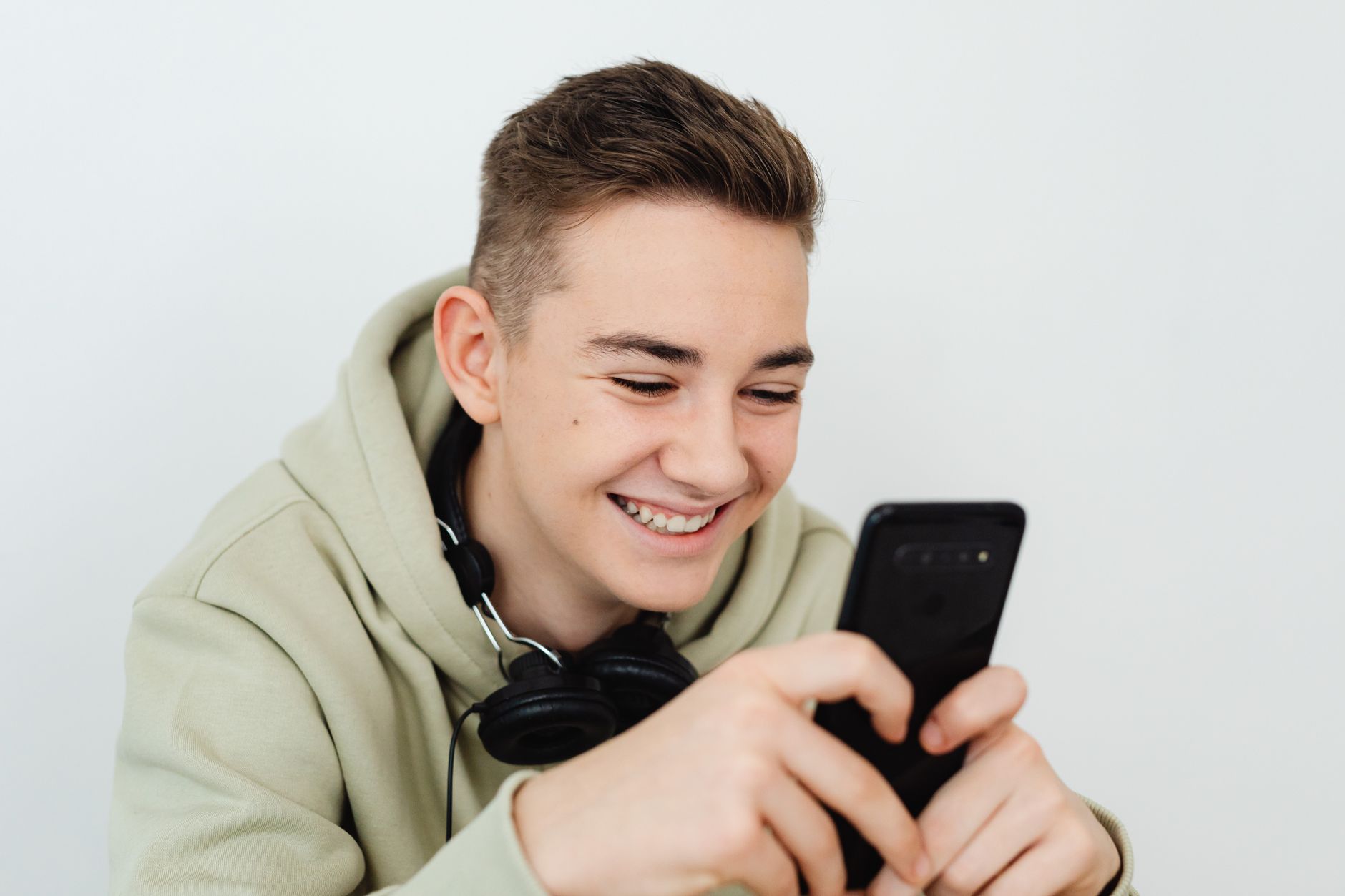
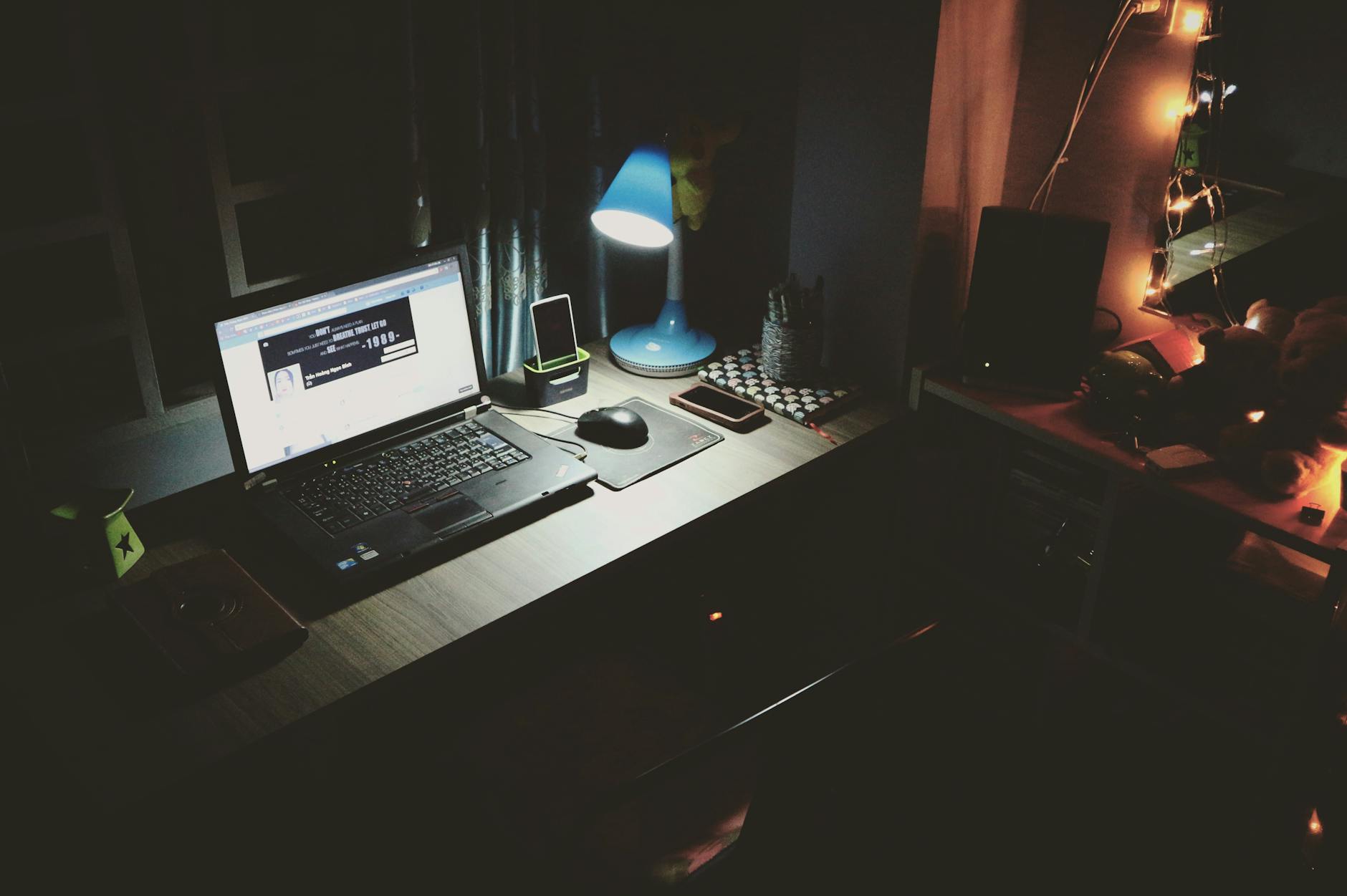
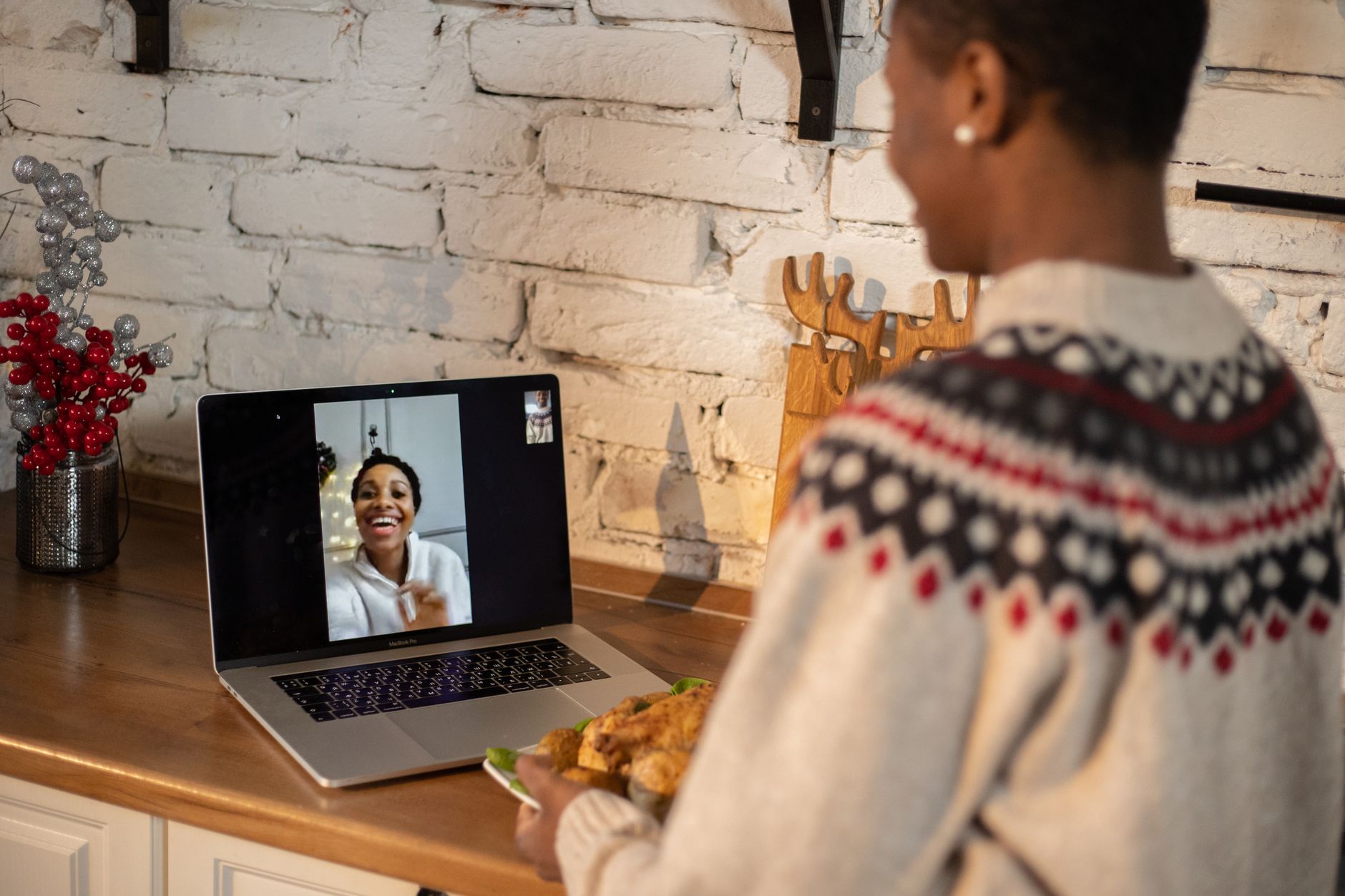
There are two video chats inside a single site. The first runs between 8 p.m. and midnight: it scrolls fast, people laugh, test the waters, skip on. The second starts around 2 a.m. and looks nothing like what you know of the rest of the day. People speak more quietly. They get to the point faster. And it's not unusual for a stranger to tell you, in eight minutes, something they've never told their colleagues.
Every regular has noticed it without necessarily putting it into words. Night doesn't just change how many people are online: it changes the nature of the conversations. And that transformation has nothing mystical about it — it comes down to a fairly precise mix of sleep neurobiology, the sociology of nocturnal populations, and effects specific to anonymity.
Understanding what happens between 1 a.m. and 5 a.m. means understanding why these exchanges can be the most memorable of your video chat experience… and also the riskiest.

Why Your Brain Isn't the Same at 3 A.M.
Fatigue switches off the social filter before anything else
The prefrontal cortex — the region that handles inhibition, planning and social restraint — is the first structure to drop out when sleep deprivation sets in. That's a classic finding in sleep research, documented notably by the work of Matthew Walker at the University of Berkeley, whose imaging studies showed that sleep deprivation amplifies amygdala reactivity while weakening the prefrontal cortex's regulation of it.
Translated into concrete terms for a video chat: at 3 a.m., you're more emotional, less self-censoring, and far worse at judging the consequences of what you say. That's exactly the cocktail that produces those disarmingly sincere conversations — and sometimes those confidences you regret at 9 a.m.
The stranger facing you is in the same state. Two filters lowered at once produces a conversation that skips the usual twenty minutes of social preliminaries.
Your circadian clock is working against you
Around 3–5 a.m., body temperature hits its lowest point and melatonin its peak. INSERM regularly points out in its sleep briefings that this window corresponds to the deepest dip in alertness of the circadian cycle: statistically, it's the hour of misjudgements, road accidents and shaky decisions.
On a video chat, that translates into three very concrete things:
- Subjective time warps. A forty-minute conversation feels like it lasted fifteen.
- Tolerance for silence rises. Pauses stop being awkward. You stay, you look, you pick it back up.
- Social judgement dulls. You "next" far less often, which isn't always a good thing.
Online disinhibition, night edition
As early as 2004, psychologist John Suler described, in his article The Online Disinhibition Effect, the six mechanisms that push people to open up more online: dissociative anonymity, invisibility, asynchronicity, solipsistic introjection, dissociative imagination and minimization of authority.
Night adds a seventh layer to that model: fatigue. A random video chat already combines anonymity and impermanence — you'll never see this person again, they know neither your name nor your city. Add a prefrontal cortex running on empty, and you get what regulars call the "train companion effect" pushed to its limit: you tell a stranger what you don't tell your loved ones, precisely because they're not part of your life.
Who's Online at That Hour?
The night-time population of a video chat isn't a random sample of the daytime one. It breaks down into a few broad families, easy to recognize after a few dozen connections.
| Profile | Recognizable signs | What they're after | |---|---|---| | The time-zone shifted | Daylight behind them, coffee in hand | A normal conversation, on their own clock | | Night-shift workers | Uniform, break time, neutral surroundings | Killing twenty idle minutes | | Chronic insomniacs | Bed in the background, low voice | Keeping the mind busy to stop ruminating | | End-of-night partygoers | Noise, a group, high energy | Entertainment, laughs, fast nexting | | The contented loners | Carefully arranged setting, headset | A real conversation, with nothing at stake |
The key point: the last two categories dominate after 2:30 a.m. The partygoers collapse, the time-shifted thin out, and what's left is mostly people who aren't sleeping and don't want to be alone with their ceiling.
It's this demographic shift, as much as the neurochemistry, that explains the particular quality of late-night exchanges. You're no longer talking to the same audience.

The Night-Time Setup: It All Comes Down to Three Details
Night is far less forgiving of technical sloppiness than daytime. There's no natural light left to rescue a bad setting, and mediocre sound becomes unbearable when everyone is speaking in a low voice.
Lighting: never let the screen be your only light source
The number one mistake in late-night sessions is letting the glow of the screen light you on its own. The result is predictable: bluish light from below, hollowed-out eye bags, greenish complexion. It's horror-movie lighting, literally — underlighting has been used for a century to make a face look sinister.
All you need is a soft source placed slightly above eye level, behind the screen. A small dimmable LED lamp set beside the monitor, tuned to a warm temperature around 2700 K, is plenty — no need to invest in a studio kit. The goal isn't to be photogenic, it's simply to remain legible. A face you can't make out is a face people skip.
Another underrated detail: turn your screen brightness down rather than up. A screen that's too bright in a dark room makes you squint, and squinting eyes convey nothing.
Sound: night is spoken in a whisper
At 3 a.m., half the people are whispering because they don't want to wake someone up. A laptop's built-in mic, designed for normal speaking volumes, turns that whisper into mush. It's the leading cause of late-night conversations breaking down, ahead even of running out of things to say.
A boom-mic headset fixes the problem in a single evening: the capsule sits five centimetres from your mouth, your voice carries even at very low volume, and the audio feedback stops you from talking too loudly without realizing it. If you share your home, it's also the most elegant way to avoid broadcasting the conversation through the whole flat.
The window: what night reveals without your meaning to
A detail few people anticipate: at night, a window behind you no longer shows a view but a reflection. The glass behaves like a mirror and can send back your screen, the entire room, sometimes another person present in it. Always check what your camera captures beyond your face before starting a night session.
The same logic applies to outside sounds: church bells, a passing train, an announcement from a nearby station. These are formidably effective location clues, and they carry much further at night, when urban background noise collapses.
The Conversations That Only Exist at Night
The register changes completely
During the day, openers revolve around context: where are you from, what do you do, is the weather nice where you are. At night, those questions fall flat. They sound like a form to fill in.
What works at 3 a.m. belongs to another register:
- "Can't sleep either?" — the mutual recognition of a shared situation.
- "What's keeping you up?" — direct, but perfectly acceptable at this hour.
- The deliberate few seconds of silence before speaking, which would read as awkwardness in daytime.
The implicit rule of night-time chat is that you don't need to justify your presence. Everyone knows why everyone is there. That shared assumption removes a good chunk of the trust-building work.
The asymmetric-confession trap
There is, however, a classic imbalance in these exchanges: one person opens up enormously, the other listens. In the moment, it's pleasant for both. Afterwards, the one who opened up often feels what researchers call the self-disclosure hangover — a retrospective unease at having said too much to someone they don't know.
Two simple safeguards:
- Actively rebalance. If you notice you've been talking for eight minutes, ask a question. If it's the other person, share something about yourself, however minor.
- Keep identifying facts out of the story. You can talk about a breakup, a burnout, a bereavement, without naming your employer, your street or your children's school. Emotions can be shared; contact details cannot.
The CNIL points this out in its recommendations on online behaviour: the most exploitable information is almost never disclosed deliberately — it's inferred from a set of small details dropped over the course of a relaxed conversation. Late-night fatigue is precisely the state in which those details slip out unnoticed.
The Real Question: Is It Actually Good for You?
Night-time loneliness is real, and chat answers part of it
It would be dishonest to treat late-night video chat as mere entertainment. For many people, it's a response to something heavier. Santé publique France has documented for several years now a rise in feelings of isolation, particularly among 18–34 year-olds, and night is when that isolation is felt most acutely: there's no one left to call, nothing left to do, and the mind turns back on itself.
In that context, a twenty-minute conversation with a kind stranger is anything but trivial. It interrupts rumination, it reintroduces a human presence, and it's a useful reminder of something obvious: other people are awake, somewhere, and doing just as well or just as badly as you.
But you pay the price in sleep
The downside is thoroughly documented. Evening exposure to screen light delays melatonin secretion — ANSES made the point in its opinion on the health effects of light-emitting diodes, highlighting the impact of blue-rich light on circadian rhythms. Add the cognitive and emotional activation of a stimulating conversation, and you get the worst possible scenario for falling asleep: a brain excited by a light telling it that it's daytime.
The vicious circle is easy to describe: you log on because you can't sleep, and you can't sleep because you logged on.
A few measures that genuinely limit the damage, without giving up night sessions:
- Set an end time, not a duration. "I stop at 2 a.m." works; "I'll stop in an hour" never does.
- Use a physical alarm clock. A sunrise-simulator model on the bedside table lets you get the phone out of the bedroom, which the Institut national du sommeil et de la vigilance recommends across the board.
- Lower the colour temperature of your screen after 10 p.m., using your system's built-in night mode.
- Plan a ten-minute buffer between the last conversation and bed. A few pages of a book on sleep and biological rhythms beat one more scroll, precisely because the medium isn't backlit.
- Write down what was keeping you awake. A hardcover notebook on the bedside table empties the mind more effectively than an hour of "nexting".
The warning sign not to ignore
There's a difference between logging on at night because you're awake, and being awake because you want to log on. The first is a use. The second looks more like a dependency, and it usually comes with a very recognizable sign: a feeling of emptiness after the session, more intense than before it.
If your sleepless nights become regular and the fatigue spills over into your days, the issue is no longer video chat but sleep itself. Ameli and the sleep centres attached to teaching hospitals offer treatment for chronic insomnia, notably through cognitive behavioural therapy, whose long-term effectiveness is now better established than that of sleeping pills.
Key Takeaways
Night doesn't make people more interesting. It simply makes them less protected — them as much as you. Everything else follows from that: the beauty of these conversations, and their danger.
Late-night video chat is a world apart, with its own codes, its own audience and its own chemistry. It produces some of the most sincere encounters you can have with a stranger, because social defences are at their lowest there. That's exactly why it demands more vigilance than any 9 p.m. session: over what you reveal, over what your surroundings reveal, and over the hour at which you decide to switch off.
Three rules are enough to keep your balance. Light yourself properly so you stay legible. Share emotions rather than contact details. And set your end time before you log on, never during — because at 3 a.m., the part of your brain that knows how to say stop has already gone to bed.