· by Rédaction
Late-Night Video Chat: What 2 AM Sessions Do to Your Brain (and Your Conversations)
Chatroulette sessions often stretch deep into the night. Here's what sleep deprivation and screen light do to your mood, your social judgment and the quality of the people you meet — and how to take back control.
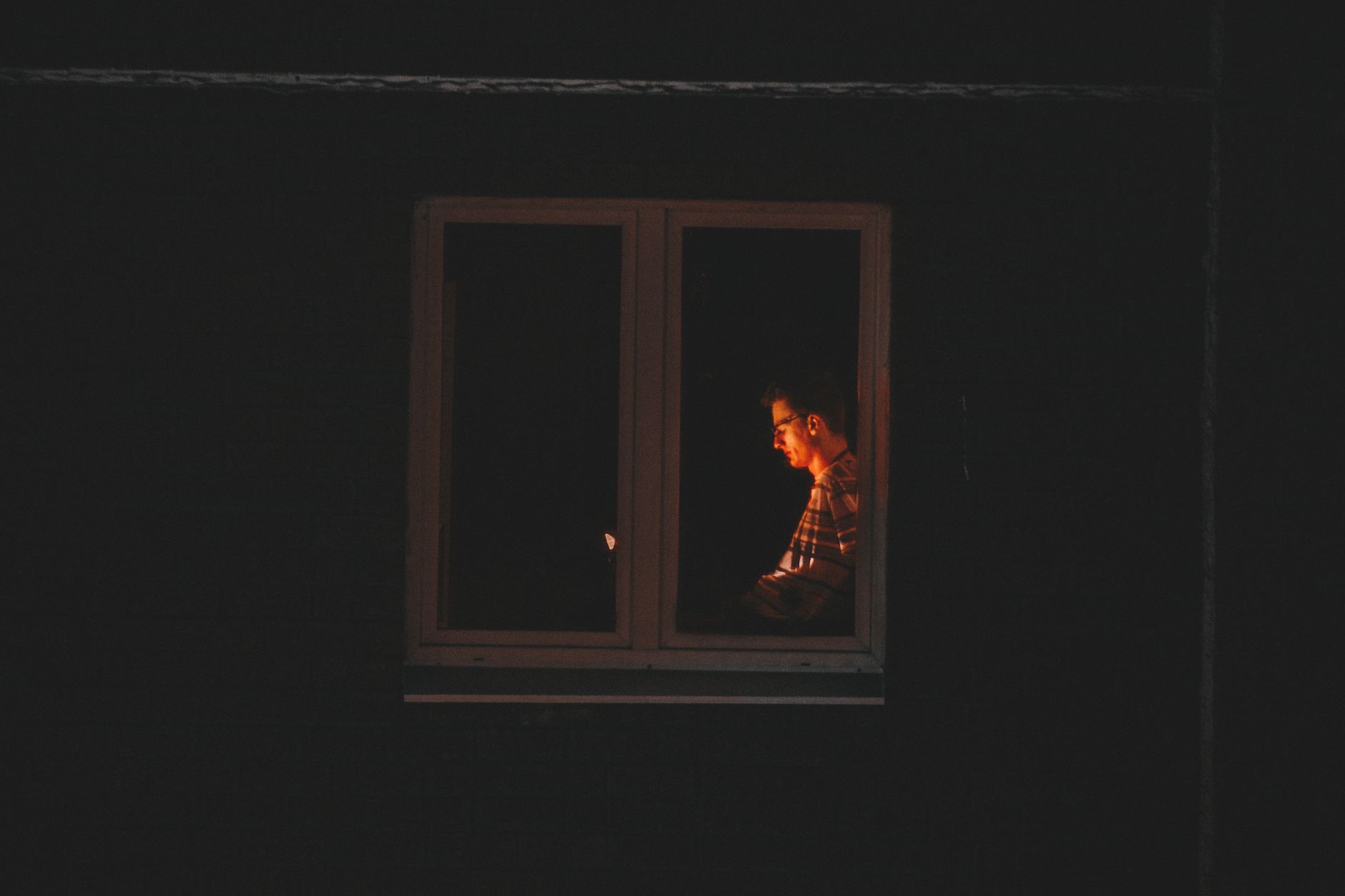
It's 1:12 AM. You told yourself "three or four people, then bed." You're on your fortieth. The stream of faces has settled into that hypnotic rhythm where nothing surprises you anymore, and yet you keep going, because there's always the chance that the next one will be the conversation of the night.
Almost everyone on a chatroulette knows that moment. Night is the natural territory of random video chat: it's quiet, nobody's knocking at the door, you dare things you'd never dare at 6 PM with family in the next room. That's not the problem. The problem is that the brain talking at 2 AM is no longer quite the same one that logged on at 10 PM — and it shows, it's audible, and it comes at a cost.
This isn't a sermon about early bedtimes. It's an explanation of what fatigue does to a virtual face-to-face conversation, and how to organize your webcam nights so they stay good.
Why Night Draws Out Honest Conversations
Social control loosens its grip
Night lifts inhibitions. No more colleagues, no more schedule, no more household noise. Attention narrows down to the screen, and that focus creates a bubble-like feeling that invites confidences. Regulars describe it spontaneously all the time: you get to the important stuff faster after midnight than you ever do mid-afternoon.
There's genuine psychology behind it. Executive control — the prefrontal cortex function that filters, tempers and weighs consequences — loosens with fatigue. That loosening can produce beautiful conversations: less posturing, less polish, more raw sincerity.
And then there's the time-zone lottery
The other reason is purely mechanical. When it's 2 AM in France, it's 8 PM in Montreal, 9 PM in New York, 4 AM in Moscow and 9 AM in Tokyo. Your nights are an entire continent's evening. That literally changes the pool of people you run into: more Americans, more French-speaking Canadians, more European night owls.
In other words, it isn't an illusion: nighttime conversations have a different flavor. Which doesn't mean they're better.
What Fatigue Actually Does to Your Exchanges
You read faces less accurately
This is the most counterintuitive point, and the most important one for anyone who does cam to cam. Facial emotion recognition degrades with sleep debt. Research led notably by Matthew Walker's team at Berkeley has shown that after sleep deprivation the amygdala — the structure involved in threat detection — becomes markedly more reactive, while its functional connection to the medial prefrontal cortex weakens. The result: the brain reacts strongly and regulates poorly.
In practical terms: at 2 AM, an ambiguous half-smile on the other side of the screen is far more likely to be read as mockery or disinterest than it would be at 9 PM. You skip someone who was simply tired too. Or you take offense at a perfectly neutral sentence.
You make worse decisions
The Institut national du sommeil et de la vigilance (INSV) and Santé publique France regularly point out that sleep deprivation impairs sustained attention, reaction time and judgment. On a video chat, that shows up as three classic mistakes:
- agreeing to move to another platform with a stranger because you no longer have the energy to say no;
- showing or saying something more personal than you intended, because the filter is offline;
- staying two more hours when the quality of the exchanges collapsed long ago.
Fatigue isn't just uncomfortable: it's a privacy risk factor. Safety reflexes (never give your full name, your neighborhood, your workplace; never leave anything identifiable in the background) hold as long as the brain is monitoring. When it stops monitoring, they're the first to go.
Your face on screen tells the story of your night
You also have to accept an unflattering reality: fatigue is visible. Heavy eyelids, a gaze that drifts, slowed micro-expressions, speech that frays at the edges. On a webcam, where the other person only has a tight frame of your face, those signals take up enormous space.
Plenty of people believe they "stop clicking" with anyone after 1 AM because the profiles are worse. Often, it's simply that they themselves have become less engaging company.
A video chat conversation is an exchange of energy as much as of words. With equal sleep debt, two tired people produce a flat conversation, and each blames the other for it.
Light, Screens and Your Internal Clock
What the research says about evening light
Evening light exposure delays falling asleep. It's been documented for a long time: light, particularly in the blue wavelengths, suppresses the secretion of melatonin, the hormone that tells the body it's time to sleep. ANSES, in its opinion on the effects of LEDs, highlights the impact of evening light exposure on circadian rhythms.
One thing often misunderstood: it isn't only the color of the light that matters, it's its intensity and its proximity. A computer screen 20 inches from your eyes, at full brightness, in an otherwise dark room, sends a powerful signal. The harsh contrast between the glaring screen and the darkness of the room also strains the eyes.
The dark-room paradox
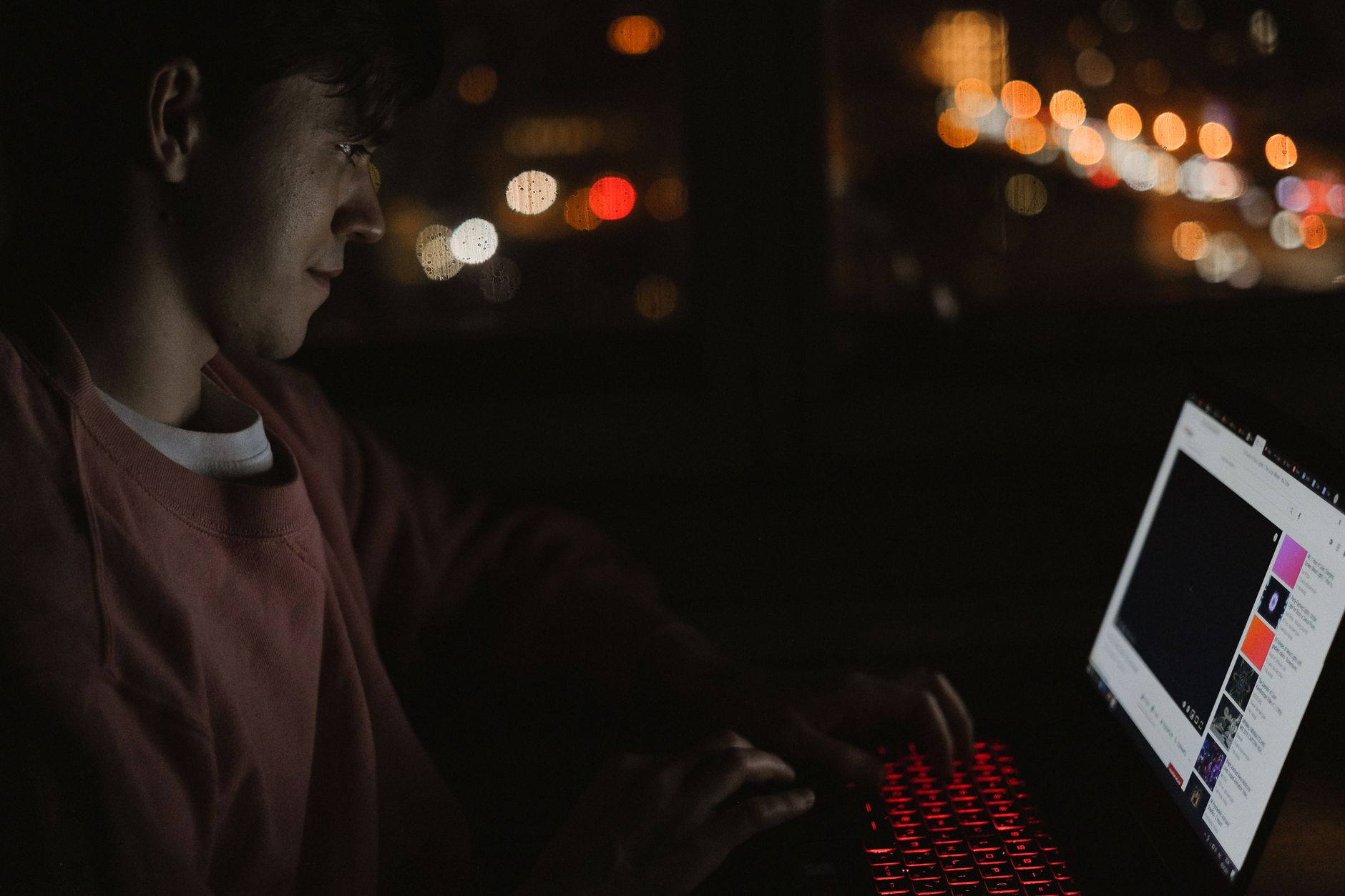
Many people chat in complete darkness, out of modesty or habit. It's doubly counterproductive: your image becomes a pallid face lit from below, and your eyes endure maximum contrast for hours.
The fix is simple and costs almost nothing: switch on a warm, low-intensity accent light behind the screen. A small LED lamp with adjustable color temperature placed behind the computer softens the contrast, noticeably improves how your face renders on camera, and tires the eyes far less than a lone screen in the dark. If you often chat late, it's probably the best-value purchase you can make for your comfort.
Two other free adjustments:
- lower your screen brightness a notch or two after midnight;
- turn on your system's night mode / warm light filter, available on every recent computer and phone.
The "Just One More" Trap
Why skipping resists willpower
Random video chat runs on a principle of variable-ratio reinforcement: the reward (a terrific conversation) arrives unpredictably, after an unknown number of attempts. It's the most effective mechanism known for sustaining a behavior — the same one slot machines use.
At night, that mechanism is amplified by fatigue: less inhibitory control, therefore less capacity to break a loop. You don't decide to keep going; you simply can't manage to stop.
Three guardrails that genuinely work
1. Set the end before the beginning. Not "I'll stop when I've had a good conversation" — that criterion is infinite by construction. Rather: "I stop at 12:45 AM." A physical timer or a simple desk alarm clock sitting next to the screen works better than a phone alarm, because it's permanently visible and you can't dismiss it with an automatic swipe.
2. Decide on the last one before it happens. Tell yourself "the next one is the last" and hold to it, even if it's disappointing. A tired brain negotiates very well; don't give it room to negotiate.
3. Physically separate where you chat from where you sleep. The advice is classic but doubly valid here: if your computer is on the bed, stopping has no boundary. A desk, however tiny, creates a closing gesture — you stand up, you switch off, you change rooms or at least change posture.
A Nighttime Protocol for Those Who Have No Intention of Quitting
Let's be realistic: nobody is going to stop chatting in the evening. The goal is to make those sessions better and less costly.
| Moment | What helps | What hurts | |---|---|---| | Before logging on | Eat, drink water, decide on an end time | Logging on "just to see" with no intention | | During the session | Warm accent light, comfortable headset, seated posture | Dark room, screen at full blast, lying down | | Final hour | Lower brightness, slow down the skipping, favor one long conversation | Firing off 60 "nexts" in ten minutes | | After stopping | 20 to 30 minutes screen-free, dim light | Going straight from the webcam to the pillow |
The twenty-minute buffer
This is the most neglected step. Going from intense social stimulation to total darkness in thirty seconds doesn't work: the brain keeps replaying the exchanges, and falling asleep drags on. A short buffer changes everything — brushing your teeth slowly, tidying the desk, reading a few pages.
On that last point, a paperback book works far better than a screen, because it emits no light and doesn't offer you something else to do. If you want to stay on theme, popular-science books on sleep and biological rhythms — a field well documented in both French and English — fill that transitional role perfectly.
Physical comfort matters more than you'd think
A two-hour session in a chair has nothing in common with a ten-minute call. The neck stiffens, the shoulders creep up, the back sags — and a tense body produces a tense on-screen presence. Two modest investments change everything:
- a lightweight headset with a soft headband, less crushing on the ears than a heavy closed-back model, for long sessions;
- a laptop stand that raises the screen to eye level, which mechanically straightens the neck and also improves your framing (the up-the-nose angle of a laptop lying flat has never flattered anyone).
And if your eyes sting toward the end of a session, add a bottle of preservative-free artificial tears: blink rate drops drastically in front of a screen, and dry eye is one of the leading causes of that "burning eyes" feeling at 2 AM. These are ordinary pharmacy products, and Assurance Maladie (Ameli) points out that screen-related dry eye is prevented first and foremost by regular breaks and good ambient humidity.
Key Takeaways
Night isn't the enemy of video chat. For many people it's the only genuinely free moment of the day, and it produces conversations that broad daylight never does. But it demands a particular kind of clear-headedness.
- Your ability to read faces degrades with fatigue: what you take for contempt is often just weariness.
- Your caution reflexes are the first to fall: make no binding decisions after a certain hour.
- The quality of your exchanges drops along with your own: forty alert minutes beat three hours on autopilot.
- The physical setup — light, screen height, headset, posture — counts as much as what you say.
The best test is simple. Tomorrow morning, ask yourself one question: "do I remember at least one person from last night?" If the answer is no, you didn't spend an evening meeting people. You spent an evening scrolling through faces — and borrowing sleep to do it.
Choose your nights. They'll be better for it.